fbpx

EduComply offers a practical, step-by-step support system that helps educational institutions achieve legal clarity and regulatory compliancewithout sacrificing independence, flexibility, or educational freedom.

Our services are designed for micro-schools, hybrid learning centres, tutor centres, ECD facilities, supplementary education providers, and home-education support hubs. Because many such institutions fall between existing legal categories, EduComply provides guidance tailored to each client’s unique model and context.

We operate on a transactional, client-controlled model: You book a session only when you’re ready. No contracts. No long-term commitments. Each consultation delivers one clear step forward.

1) EduComply Initial Consultation

Clarity. Classification. Direction.

The Starter Consultation is your entry point into the EduComply system. It provides a full diagnostic of your institution’s situation and the laws that apply to you.

What you get:

  • Identification of your institution’s correct category
  • A clear explanation of which laws apply (Schools Act, Children’s Act, BELA Act, municipal regulations, etc.)
  • Assessment of compliance gaps and risk
  • High-level overview of your possible pathways (registration options, exemption routes, hybrid models, etc.)
  • Guidance on how to protect your educational freedom
  • A personalised “Next Step” sent by email after the session

Outcome:

A clear understanding of your legal position and a confident, realistic starting point for compliance.

Click here to book an Initial Consultation


2) EduComply Follow-Up Consultation

Action. Implementation. Progress at your pace.

The Follow-Up Consultation helps you take the next step recommended after your first session. Each consultation focuses on one specific action, keeping the process manageable and stress-free.

What you get:

  • Practical support to complete the next step
  • Hands-on help with documentation, operational structure, municipal requirements, or registration preparation
  • Guidance tailored to your exact model (school, ECD, hybrid, learning centre, supplementary centre)
  • Advice on interacting with officials and avoiding misclassification
  • An updated Next Step email after each session

Outcome:

Steady progress toward legal compliance and operational stability — on terms you control.

Click here to book a Follow-up Consultation


⭐ How the two services work together

1. Starter Consultation

  • Clarifies your institution’s legal category, risks, and options.
  • You receive one clear recommended action.

2. Follow-Up Consultation

  • You book only when you’re ready to act.
  • We complete that action together.
  • You receive a new recommended next step.

3. Repeat

  • Each session moves you one practical step forward.
  • You remain in control of the pace and scope.

This model keeps compliance affordable, manageable, and fully aligned with your independence.
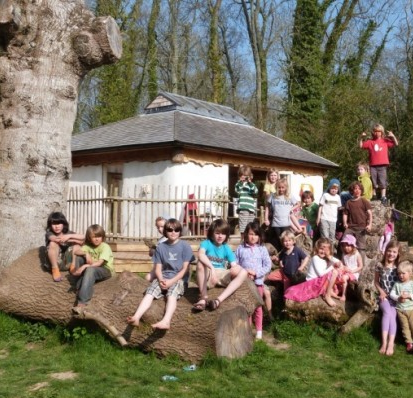
There are various ways to find learning centres. ... Since there is no central registry of learning centres, they are often operated from private homes and many are not registered as a private school, these learning centres are difficult to find. The SAHomeschoolers assists parents to find learning centres in different ways.

Unregistered private schools often do not want their details to be made public, since that could expose them to prosecution by government officials. To enable parents to find such learning centres, SAHomeschoolers maintains a confidential learning centre mailing list of such learning centres. Through the SAHomeschoolers website, parents looking for a learning centre can send a message to this mailing list. Learning centres that can assist these parents will them contact them directly. Click here to send a message to the learning centre mailing list.

Homeschool, micro-school, learning centre, unregistered private school, low-fee school and cottage school  are names that refer to small independent or private schools that are operated by a small group of entrepreneurs, parents, ex-teachers or volunteers. This fast-growing phenomenon was acknowledged in a 2010 research paper by the Centre for Development and Enterprise, which described it as South Africa’s "hidden asset". This research was followed by a 2012 report with the title "Promoting school choice for the poor" and a 2013 report with the title "Affordable private schools in South Africa".

These types of schools are growing quickly in countries such as India, Pakistan, Chile, Ghana and Colombia, but they also occur in a highly regulated countries such as the Netherlands. In Nepal, Uttam Sanjel, a former actor, started a network of bamboo schools to provide private education to poor children.

A more recent development is boutique schools. These schools are fast replacing the more traditional private schools. Learning is blended, the schools are progressive and the teachers are mentors. Boutique schools are generally bigger than cottage schools and learning centres as they can accommodate up to 50 students, but are still smaller than typical private schools. 

THE LEGAL ENVIRONMENT

Although South African citizens have the constitutional right (article 29(3)) to operate independent or private schools, many of these schools are not registered with the provincial government. According to the report this is because these schools are expected to meet a large number of strict requirements set by officials who have no knowledge of independent or private education. Sometimes it also takes years to register an independent or private school.

Officials at the Department of Education are generally negative about small independent or private schools and view them as “fly by nights” that exploit parents by charging high fees and delivering low quality education. Due to this, the provincial government actively attempts to close down unregistered independent or private schools.

SUPPORT LEARNING CENTRES 

SAHomeschoolers.org supports learning by offering the following services.

  • A Private Connect service through which parents can contact unregistered independent or private schools without exposing the details of the organisation.
  • The EduComply consulting service that assist learning centres to register learning centre without compromising their character.


COTTAGE SCHOOL LinkedIn GROUP

A LinkedIn group has been created where operators of learning centres can interact with each other.

Important considerations when starting a learning centre ... ... ...

Home school , micro school , learning centre , unregistered private school, low fee school and cottage school are all different terms that are used to refer to a new fast growing phenomenon in the South African educational environment. These are (mostly) small independent or private schools that are operated by a small group of entrepreneurs, parents, ex-teachers or volunteers. If you are interested in starting a learning centre, you can follow the steps below:

  1. Engage with EduComply : According to art.29(3) of the constitution, everyone has the right to establish and maintain an independent educational institution that is registered with the state. Unfortunately provincial authorities make it difficult to register by requiring citizens to meet burdensome and illegal requirements. EduComply will provide guidance on how to handle the registration process and how to avoid conflict between the school and the authorities, so that you can focus on getting the learning centre started.


  2. Join the Learning Centre Mailing List : If you are operating a learning centre, or are supporting learning centres, and you want to receive messages from parents searching for a centre, your email address should be added to the Learning Centre Mailing List. In order to get added to this mailing list, please send an email to This email address is being protected from spambots. You need JavaScript enabled to view it. This service is offered free of charge. The mailing list is confidential and will not be made available to third parties.


Legal & Research

Research on Home Education

Research on home education consistently proves that home learners

+ View

Homeschooling and the law

Home schooling was recognized in 1996 in Section 51 of the SA Schools

+ View

History of homeschooling in SA

History of home education in South Africa (Wikipedia article)

+ View

Centres

EduComply Services

EduComply offers a practical, step-by-step support system that helps

+ View

Learning centre overview

Homeschool, micro-school, learning centre, unregistered private

+ View

Start a Learning Centre

Important considerations when starting a learning centre

+ View

Find a learning centre

There are various ways to find learning centres. Since there is

+ View

Homeschool ABC

A

Approaches

Popular homeschooling approaches and styles ...

+ View
B

Beginning

4 Easy steps to start homeschooling ...

+ View
C

Curriculum

How to choose a curriculum for your family ...

+ View

Videos

SAHomeschoolers.Org Youtube Channel

Support

Homeschool Family blogs

Blogs by homeschooling families that share their experiences and ...

Tutors

Tutors provide additional support to homeschooling parents. ... ...

Support Groups

Forums where parents and learners discuss issues with each other and ...

Assessment Tools

Assessment - Choose What Works for Your Family Parents can now ...

Curriculums

My Online School

South Africa’s Smartest Way to Learn from Home My Online ...

Learn, code and create with Ubbu

  Introducing ubbu!An Adventure of Code and Play!   Learn, Code ...

GED through Learnalot - Grade 12 ...

Why enrol with Learnalot? With Learnalot, you have the flexibility ...

Beit HaSefer

  Tailor made Home Education by Beit HaSefer (No ‘one size fits ...

Frequently Asked Questions

Has no content to show!

  • Prev
  • Curriculums & Resources